Showing A Quiet Card Without Being Awkward
How do you discreetly show someone a message when the person you’re with is standing right there? Here are simple, natural ways to share a Quiet Card without making the interaction awkward or drawing attention to it.
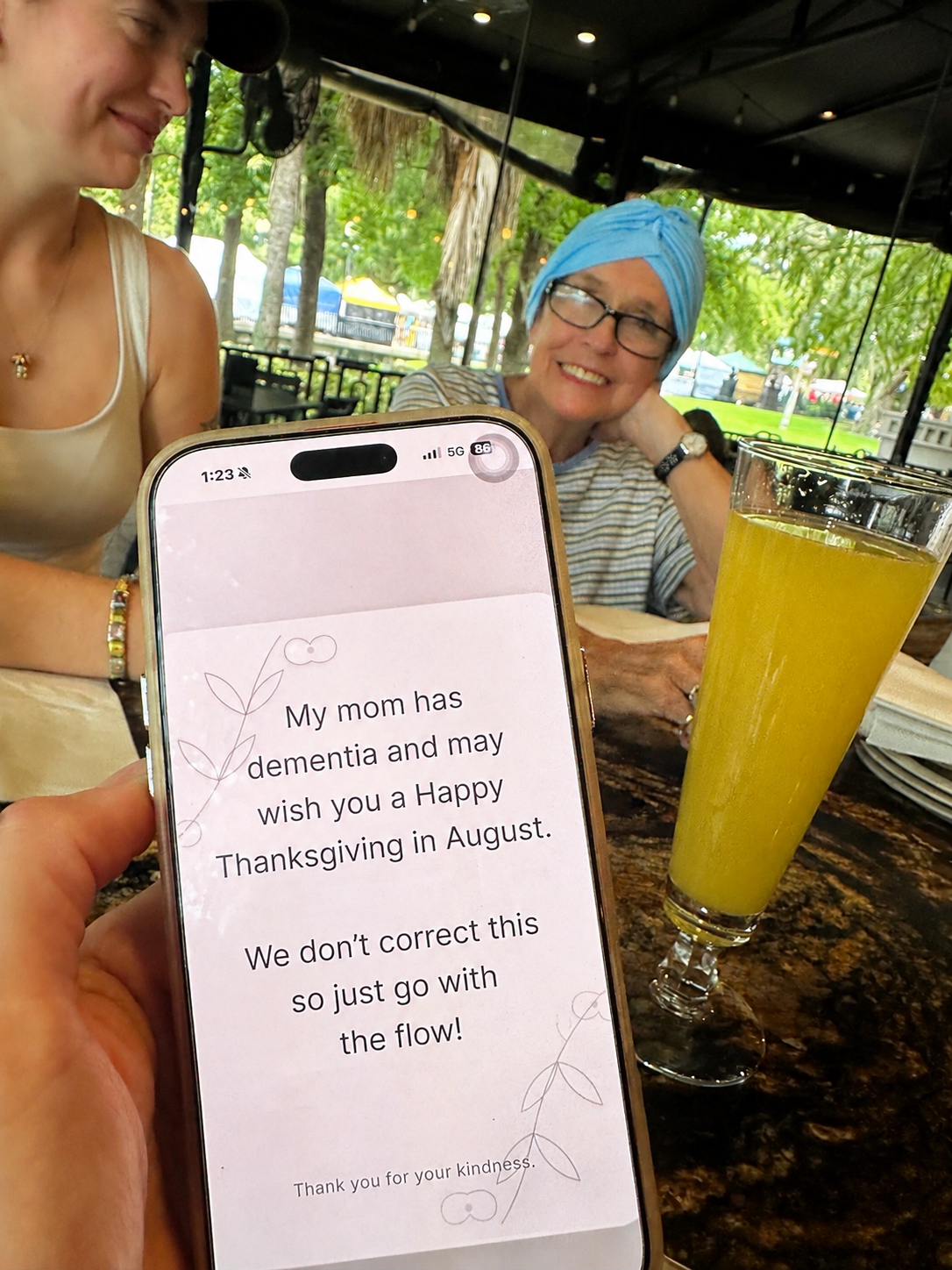
Having a message ready is one thing. Actually getting another person to look at it discreetly when the person you’re with is standing right there can feel like an entirely different problem.
Do you hand a restaurant server your phone? Hold it up? Whisper that they need to read something? And what happens if they respond by reading the whole thing out loud?
The good news is discreet communication usually doesn’t require as much maneuvering as you might imagine. In fact, I’ve found that the less unusual I make the interactions seem, the better it works.
I usually have the Quiet Card already created and open on my phone and simply give the person I need to communicate with an ordinary reason to look at my screen. What I’m saying aloud isn’t necessarily related to what’s on the screen. It just has to make showing someone my phone feel completely normal.
For cards where it’s particularly important that the information stay quiet, I often begin the message with:
DON’T READ THIS OUT LOUD.
That gives the person receiving it an immediate cue.
And this doesn’t have to be perfectly secret to be discreet. Sometimes my mom may notice that I’ve shown someone my phone. That’s okay. My goal isn’t to pull off a covert operation. My goal is to communicate something she doesn’t need to hear discussed aloud in a way that protects her from being triggered, and helps the interaction go more smoothly.
The same technique can work whether you’re using a Quiet Card, a handwritten card, or another method. The important part is to have the message ready, give the person you're talking to a natural reason to look at it, and make the written message clear enough that they know what to do next.
What can you actually say while showing someone your phone?
There isn’t one magic phrase. Choose something that makes sense in the setting and sounds natural coming from you. And remember: boring is our friend here. The more ordinary the interaction looks, the less attention it attracts.
At a restaurant
This is probably where I use Quiet Cards most often.
Maybe you need to quietly tell a server about a particular behavior, condition, dietary concern, a substitution, or something else that doesn’t need to become a conversation at the table.
Try showing your card and saying:
“Are you taking this discount?”
or
“Can you tell me if you still have this?”
The server looks at your phone expecting to see a coupon, promotion, or menu item and instead sees the message you need them to read. If it’s especially important that they don’t discuss the message aloud, remember to put DON’T READ THIS OUT LOUD right at the beginning of the card.
At a doctor’s appointment
There are times when you need to give a doctor, nurse, or medical assistant information that could embarrass or upset the person you’re supporting, or information that could affect how the appointment goes if you discuss it in front of them.
I’ve used:
“Is this still the current med list?”
or
“Was this the right day for the appointment? I have this confirmation.”
This one feels especially natural because patients and caregivers show medical staff information on their phones all the time.
Of course, discretion should never keep you from sharing information openly when your loved one needs to hear, understand, or participate in the medical conversation. This is simply an option for those moments when a particular piece of information is better communicated quietly.
At a grocery store or other shop
Sometimes my mom starts conversations with strangers that make perfect sense to her but may not make much sense to the person she’s talking to. I don’t necessarily need that person to do anything. I just want to give them a little context so they understand what’s happening.
I can hold up my phone and say:
“Do you know what aisle this is in?”
or
“Have you seen this here?”
The card itself might simply say:
DON’T READ THIS OUT LOUD. My mom has dementia and may not always make complete sense. Thank you for your patience.
Now the stranger understands what’s happening without my having to announce my mom’s diagnosis in front of her. Sometimes that tiny bit of context is all someone needs to relax, smile, and continue the conversation rather than looking confused or repeatedly trying to correct something that doesn’t need correcting.
At a hotel, theme park, attraction, or ticket counter
Busy public places can create all kinds of situations where a little information ahead of time helps. Someone may need extra time. They may become confused by a question, repeat themselves, have difficulty answering, become overwhelmed, or need you to assist with part of the interaction.
You might show your phone and ask:
“Is this where I’m supposed to check in?”
or
“Does this work here?”
The employee gets the context before the situation has a chance to become uncomfortable.
At a salon, pharmacy, reception desk, bank, or other counter
Sometimes you’re standing so close to the person you’re supporting that trying to whisper something to an employee would actually attract more attention than simply showing them your phone.
Try:
“Is this the right information?”
or
“This was the email I received.”
These are wonderfully boring sentences. Nobody thinks twice about someone at a counter looking at another person’s phone, and that’s exactly the point.
When a stranger starts a conversation
This one can be a little trickier because there may not be an employee, transaction, or obvious reason to show someone your phone. But you still don’t have to turn it into a production.
You might show your phone and say:
“I'm looking for a bathroom/water fountain/trash can, etc. Is this the correct location?” ...like you're looking at a map
Sometimes eye contact, a small gesture toward your screen, and a quick question are enough. You don’t always need a clever cover story. The goal is simply to communicate the information without unnecessarily making the person you’re supporting the subject of a public conversation.
Discreet doesn’t always mean secret. Not everyone who uses discreet communication needs information hidden from the person they’re with. Someone may know perfectly well that their caregiver communicates certain information for them. Someone may use a Quiet Card themselves because speaking is difficult. In another situation, hearing a particular piece of information discussed aloud could cause embarrassment, confusion, distress, agitation, or an argument.
Those are all very different circumstances.
The goal isn’t to hide information from people simply because they have a disability, a cognitive impairment, or another condition. Use the amount of discretion that makes sense for your person and that particular situation. It will always be different for every caregiver and circumstance.
For my mom, there are particular things that I know will be much easier on everyone involved if I communicate quietly. That’s what works for us.
What you put on the card matters too! Getting someone to look at your phone is only half of the equation. Remember that the person receiving your message may have only a few seconds to read it, understand what you’re asking, and respond appropriately while simultaneously pretending they haven’t just been handed secret instructions. lol
So this probably isn’t the time for your loved one’s complete medical biography.
Instead of:
“My mother was diagnosed with stage 3 dementia four years ago and now she gets irritated about a lot of things when eating out in restaurants. She gets agitated and might also say things that don't make sense or use off words so don't take it personally.”
something like this may be much easier to read and more useful:
DON’T READ THIS OUT LOUD. My mom has dementia and may not always make complete sense. Please just go along with the conversation. Thank you.
Or, if you need someone to take a specific action:
DON’T READ THIS OUT LOUD. My mom has dementia and is a fall risk. Please bring her the nonalcoholic version without mentioning the substitution. Thank you!
A useful card usually answers three things very quickly:
What does this person need to know? What would you like them to do? Is there anything they specifically should NOT say or do?
And you don’t necessarily need to share a diagnosis at all if you don't feel it adds context. Sometimes the useful information may simply be:
Please ask me about the appointment time rather than asking her.
Or:
If she tells you we’ve never been here before, please don’t correct her. Just go along with it. Thank you.
Share only as much personal information as the situation actually requires. The goal isn’t to hand strangers someone’s medical history. It’s to give another human being the amount of context they need to help an interaction go a little more smoothly.
Discreet communication doesn’t have to LOOK like discreet communication.
Sometimes it can look exactly like just asking a server if they take a discount.